
Metal chandelier hanging from an archway leading to the intricate stone buildings of Quartiere Coppede in Rome, Italy

Quartiere Coppede, Italy: Off The Beaten Path


With so many popular neighborhoods to explore in Rome, do not miss the picturesque Quartiere Coppede: an enchanting square with charming architecture and eclectic details. Looking like it was built for a film set, Quartiere Coppede has the Old Roma magic we’re all looking for in a trip to Italy. From the fairy cottages and spider house to the grand archway and ornate wrought iron chandelier, this quaint neighborhood is a diamond in the rough for those seeking to escape the crowds.


At the intersection of Piazza Buenos Aires, Via Tagliamento, and Viale Regina Margherita, this tiny quarter is a series of peach, marigold, and burnt orange buildings centered around the ornate “Fountain of the Frogs.” Built between 1915-1927, Quartiere Coppede was designed and created by Florentine architect Gino Coppedè with various styles of architecture at play: classical, medieval, and gothic to Baroque, Art Decò, and Art Nouveau. The wildly diverse styles come together to form an eccentric and beautifully unique atmosphere for all who pass through.
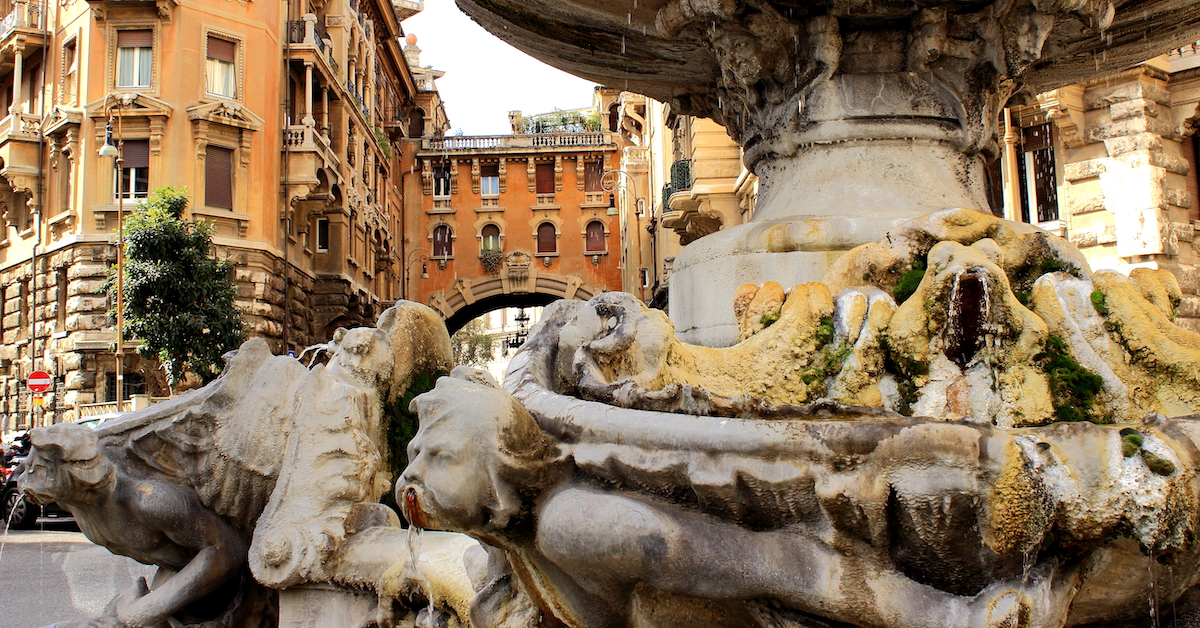
 

Close-up of a fountain in Quartiere Coppede

© Grozdanka Todorova-genevaDreamstime.com


Devoid of restaurants, shops, and other attractions, Quartiere Coppede is an unusual stop for globe-trotters, making it one of the best hidden gems Rome has to offer. Tucked away from the well known areas of Rome, Quartiere Coppede is a retreat from the busier districts of the city, and a place to meander with your camera; its unpretentious and humble character makes for a secluded and pleasantly surprising adventure.


According to urban legend, the Beatles jumped into the “Fountain of the Frogs” fully clothed after playing a show at the iconic Piper Club down the street.


Featured image: © FlydragonflyDreamstime.com


Valensole Lavender Fields_feature

Valensole Lavender Fields, France: Off The Beaten Path


Valensole is a quaint french village known for its vast and beautiful lavender fields. From the aromatics to the vibrant colors against the pale blue sky, Valensole is a breathtaking stop while adventuring through picturesque Provence.


A purple dream spanning the horizon as well as awakening your nose, the Valensole lavender fields are a real-life postcard. Although you could schedule an official tour with one of the local producers (we love J.P. Angelvin), there are also spots that are free and open to the public for snapping photography.


In addition to the famed lavender fields, visitors can also visit one of the sunflower fields that the Valensole plateau has to offer! Not quite as popular, but just as beautiful, the sunflower fields are bursting with life and color. Between the purple lavender and yellow sunflowers, visitors can anticipate miles of sweeping florals. Keep in mind, the flowers attract bees, so you will experience them buzzing around during your visit. Don’t be alarmed, they’re simply gathering the best ingredients for the most flavorful honey you’ll every taste! Head to one of the farms or local shops to buy a jar of honey made by these lavender-loving bees.


Mid-June to early July is the best time to visit, as there is a short window for when the lavender is in full bloom!


Featured image: © Andrey Gudkov | Dreamstime.com


Jardins do Palacio de Cristal, Portugal: Off The Beaten Path


With dramatic views over the Rio Duoro, the Jardins do Palacio de Cristal is the perfect spot to escape the city and meander the gardens at leisure. Although the former Crystal Palace is no longer there, the diversely styled and constructed gardens remain untainted and offer a welcoming invitation to guests. With a panoramic view spanning from the Dom Luis Bridge to the Arrabida Bridge, the Jardins do Palacio de Cristal may just be the best view over Porto.


Although the property is compact in size, that intimacy is expanded throughout the multitudes of artistic horticulture. Focusing on unity, harmony, and balance, the Jardins do Palacio de Cristal is sure to bring you peace while overlooking the Douro. The wide variety of trees and bushes, plus the fountains and artistic pathways make for a visually pleasing experience. If you’re lucky you may catch a glimpse of the photogenic peacocks that wander the property.


Originally constructed for the International Show in 1865, the Palacio Cristal was destroyed in the 1950s, causing a flurry of despair. The silver lining: the gardens designed by landscape architect Emilio David of Germany survived. Although the property may not be the largest in the area, it is the most diverse with a state of the art domed sports pavilion and a mosaic of miniature gardens, all with their own distinct flavor, just like Porto.


Featured image: © Saiko3p | Dreamstime.com


Villa Demidoff_feature

The Colossus of Villa Demidoff, Italy: Off The Beaten Path


Sitting in apparent anguish, the Colossus of Villa Demidoff, also known as Colossus of the Apennines, is a giant outdoor sculpture that seems to grow right from the rocky ledge it sits on. Located just outside of Florence, the Colossus sits in the transformed Park of Pratolino, next to a charming waterlily pond, and surrounded by acres of parkland to explore.


The massive statue dates back to the Renaissance and was created by Giambologna for the estate owner Francesco I de’Medici and his second wife Bianca. Made of brick and stone, the enormous sculpture used to be even larger than it is today, incorporating grottos, frescoes, and geometric decorations inside. Appreciate his pain, as well as his power, and take in all of this giant’s glory before adventuring through the rest of the magnificent property.


Villa Demidoff and the Park of Pratolino offers many enchanting sights: the beautiful Chapel of Buontalenti, Cupid’s Grotto, Fountain of Mugnone, and Maschera Fishpond to name a few. You can roam past the centuries-old oaks and local flora, and maybe even catch a glimpse of the deer and other wildlife that inhabit the land. This natural reserve is a picturesque spot to spend an afternoon in the sunshine and shade.


Featured image: © Giuliano2022 | Dreamstime.com


White-washed Vlacherna Monastery in the middle of a bay with mountains in the background

Vlacherna Monastery, Greece: Off The Beaten Path


With white-washed walls and a bell tower entrance, the Vlacherna Monastery is a picturesque islet set against the backdrop of the sparkling turquoise Gulf of Halikiopoulos. From the towering mountains in the distance, to the stone walkway that connects the quaint monastery to the coastal mainland, this mini-historical-site is one of the most emblematic of Corfu.


Originally built in the 17th century, the Vlacherna Monastery only served as a religious sight until 1980. After that, it became an event space to host weddings and receptions. The tiny church is open to the public along the gift shop that often spills out onto the patio in front of the church, selling woven blankets and other goods. Locals (as well as travelers) visit the chapel to light candles, a serene touch to the already peaceful space.


Parking is available in Kanoni, then walk down along the narrow jetty leading to the church. Although you don’t need a lot of time at Vlacherna Monastery, you could spend a morning or afternoon between here and the neighboring Mouse Island, making for a quintessential and picturesque stop. If you feel so inclined, there are a couple of cafes on the mainland village of Perama for when you want to grab a bite to eat and have a sweeping view of the bay.


Featured image: © MilosducatiDreamstime.com

Hellbrunn Palace, Austria: Off The Beaten Path


Built in 1619 by Salzburg archbishop Markus Sittikus, the Hellbrunn Palace was created as a summer playhouse for the archbishop to entertain guests on hot afternoons. Today, visitors are welcomed to take a refreshing tour of the Trick Gardens and see what the world’s funnest castle is all about!


Constructed on top of a natural spring, water is the primary focus of the Hellbrunn Palace, though practical jokes come in at a close second. Archbishop Sittikus had a keen sense of humor when he came into office, constructing a daytime-only palace (there are no bedrooms in castle) for his friends and guests to be entertained. They would start by feasting at an outdoor table in the garden, only to be shocked when fountains of water sprung from the tabletop and from under their buttocks! What a refreshing prank on a hot, summer day!


As the day continued, Sittikus would take his guests on a tour of his gardens to see the water-operated and music-playing Rock Theater, as well as various fountains that would be activated by Sittikus himself. One fountain to note is a grotto and crown being pushed up and down by a fountain, symbolizing the rise and fall of power; the archbishop never took himself too seriously.


Visitors today can expect to get wet if taking the tour. As if the palace full of oddities and amusing Trick Gardens weren’t enough, the extravagant summer property has an extensive network of footpaths to explore!


Featured image: © Hans | Pixabay


St. Beatus Caves, Switzerland: Off The Beaten Path


The St. Beatus Caves are a natural phenomenon full of mystery, legend, and awe-inspiring wonder; it also may be Switzerland’s best kept secret. With waterfalls, underground gorges, ravines, and soaring stalactite-covered ceilings, this intricate cave system is a fairytale of stone, high above Lake Thun.


As legend has it, Saint Beatus of Lungern was a monk and hermit of early Christianity who evangelized in the mountains surrounding Lake Thun during the 2nd century. While exploring the caves and attempting to make them his home, Saint Beatus was met by a ferocious dragon with flames coming from his eyes. The monk fought and defeated the dragon, successfully making the maze of tunnels his hermitage, as well as saving the local Swiss villages from the beast. Or so the story goes.


With 9 miles worth of caves having been uncovered and mapped so far, the vast labyrinth of limestone is a wonder. You don’t have to enter the caves to be amazed, however; even glimpsing the outside of the monastery on the side of the cliff is a delight for your eyes! With multiple waterfalls streaming from under the beautiful architecture, and with the view of Lake Thun and the Alps behind you, everywhere you turn looks as though it is straight from a storybook.


That must’ve been what J.R.R Tolkein thought when he visited the site in 1911. It is said that the St. Beatus Caves were his inspiration for the mystical Elven realm of Rivendell.


Please note: it’s a 15 minute hike to get to the caves. The hiking trail and waterfalls are open year-round; the caves, restaurant, and museum are open March through November.


Featured image: © Atmosphere1 | Dreamstime.com


Sezincote Estate_feature

Sezincote Estate, England: Off The Beaten Path


If you’re looking for an oddly exotic oasis in the middle of the United Kingdom, head over to Sezincote Estate in Gloucestershire for an eclectic afternoon in the gardens. Nestled in the middle of the Cotswold countryside, this majestic gem is intriguing with its Neo-Mughalai design, onion-domed rooftop, elephant statues, and meticulously manicured property.


In 1805, Charles Cockerell inherited the Jacobean manor from his brother, renovating it with the help of his other brother, architect Samuel Pepys Cockerell. Having made his fortune by trading in India, Charles wanted his estate to mimic the Rajasthani palaces that he so adored; from the sandstone exterior decorated with peacock feathers to the patinated dome crowning the manor in glory, Charles’s vision came to life.


With 4,500 acres to explore, this extravagant property of the Sezincote Estate is certainly one to behold. Travel the pebbled pathways to the serpent fountain, then the crescent bridge featuring Brahmin bulls, and finally the elephant structures nearer to the mansion. With Indian symbolism scattered throughout the property, don’t be surprised if you see a lotus flower sitting amidst the English horticulture. Some call it the English Taj Mahal; its mix of various architectural and stylistic designs is extraordinary.


Featured image: © Geoffrey Allerton | Dreamstime.com


Jardin Exotique de Monaco_feature

Jardin Exotique de Monaco, France: Off The Beaten Path


Located on the dramatic cliffside of Monaco, the Jardin Exotique de Monaco is the perfect day trip if you’re staying in the south of France. With succulents, cacti, and panoramic views of the Mediterranean, the flourishing garden is a mountain oasis for all ages. As part of the Jardin Exotique, we suggest taking a guided tour of the beautiful grotto on the property!


Originally brought from Mexico in the late 1860s, the succulents were grown by Augustin Gastaud, Chief Gardener of the State Gardens of Monaco, in the Jardin St Martin. The exotic plants were later transplanted by Prince of Monaco Albert I to a piece of land in Les Moneghetti in 1912. This property was the start of the Jardin Exotique de Monaco.


During the construction of walking paths and footbridges, it was found that the property was sitting on an ancient grotto, filled with evidence of prehistoric human inhabitants. It is well worth it to take a tour of the enchanting underground cavern. There is also a museum of Prehistoric Anthropology within the gardens to display the findings of the excavation.


Over the years, exotic plants have been added to the garden from all over the world; you will find vegetation from Central and South America, South and Oriental Africa, Arabian Peninsula, and the South-West of the USA. With such a diverse range of plants, along with the stunning view over Monaco’s shining coast, the Jardin Exotique is a fantastic stop along the Mediterranean for a picturesque afternoon.


Meteora Greece_feature

Meteora, Greece: Off The Beaten Path


“Hovering in the air,” the Meteora monasteries are pillars of beauty, ingenuity, architecture, history, faith and culture amidst the rocky landscape of Greece’s inlands. Built into the rocky columns, the six active monasteries each have their own personalities and histories; all are worth traveling to!


During the 11th century, the area was settled by monks living in caves within the mountains. As the Turkish occupation expanded, the monks moved higher into the cliffs of Meteora, until they reached the inaccessible peaks in which they now sit. With ladders, baskets, and pulley systems, the monks were able to build incredible buildings atop the stone pillars in order to live out their days of devotion and hermitage. Today, only a handful of monks live at the properties and maintain their way of life, despite the visitors seeking peace, culture, and of course, a stunningly beautiful view!


To say that ‘the hike into the monasteries is picturesque’ would be an understatement. Though, it is not for the faint of heart. Parts of the trails (in particular, the trail leading to The Monastery of Agios Nikolaos Anapafsas) can be difficult for some as it is very steep. Thankfully, there are now roads that connect the monasteries; you can drive in, park, and walk just a short distance to arrive at the spectacular structures. Please note: the monasteries have differing closing times as well as lunch breaks. Be sure to check the dress code requirements before you arrive.


Featured image: © Lorenzo Spoleti | Unsplash