A sprawling tan and white palace with a fountain in front and an Italian flag on top

Royal Villa of Monza, Italy: Off The Beaten Path


An 11-minute train ride from Milan Centrale, the Royal Villa of Monza offers a stately visit with sculpted gardens, vast lawns and, of course, the magnificent palace! Home to over 4,000 varieties of roses as well as an orangerie, you can be sure that the air is sweet-smelling and the gardens are picture-worthy.


Sitting on the banks of the Lambro river, and at the foot of the hills of Brianza, the English-styled gardens were designed by Giuseppe Piermarini and feature extensive topiary and manicured bushes. The palace is just as impressive with 700 rooms, all decorated in opulent fashion of the time. With an ambitious U-shaped layout, the Royal Villa of Monza is striking to say the least. When visiting, be sure to seek out the small court theatre as well as Appiani’s rotunda, which is located next to the orangery.


With sweeping architecture (26 arched south-facing windows), the orangery makes a romantic statement as it faces the the main courtyard. Added to the original structure in 1790, the orangery housed various kinds of citrus trees, exotic plants and rare botanical collections. Today, the space is home to a museum and is frequently rented out for exhibits, shows and galleries.


Built between 1777 and 1780, the Royal Villa served as a vacation home for the Archduke Ferdinand of Habsburg, gifted to him by his mother, the Empress Maria Theresa of Austria. Not only was the location a picturesque one, but it was strategic as well; positioned along the Milan-Vienna route, the palace complex hosted various royalty and dignitaries visiting Italy throughout the centuries.


Featured image: © Xiaoma | Dreamstime


Aerial view of stone ruins in the Valle dei Mulini

Valle Dei Mulini, Italy: Off The Beaten Path


Hidden deep in the crevice of a cliff range in Italy, the Valle dei Mulini (Valley of the Mills) sits in beautiful ruins. A haunting oasis secluded from the rest of the world, the abandoned buildings are covered in vibrant moss and vines, beckoning to be remembered.


The gaping crack in the rock (created by the Campri Flegrei eruption 35,000 years ago) was the perfect place for the Sorrentine people to build a mill, as they took advantage of the river at the bottom of the valley. In the 13th century, stone flour mills were successfully established to grind grain, then later a sawmill for the cabinet-makers, and a wash-house for women to do laundry.


The mills were the beginning of a flourishing industrial village, though their existence wouldn’t last long. At the end of the 19th century, flour milling was mostly moved to the nearby pasta mills, putting an end to the industry in the Valle dei Mulini. With villagers moving out to find work, the crevice town became obsolete by 1940.


Since the abandonment, aggressive vegetation has slowly taken to the crumbling buildings, creating a mystical and eerie atmosphere. The city of Sorrento has voted to restore the mills, making it temporarily inaccessible to hike down into the canyon. The village can be viewed from the above Viale Enrico Caruso.


Featured image: © Ksenia Samorukova | Dreamstime


Via Appia, Italy: Off The Beaten Path


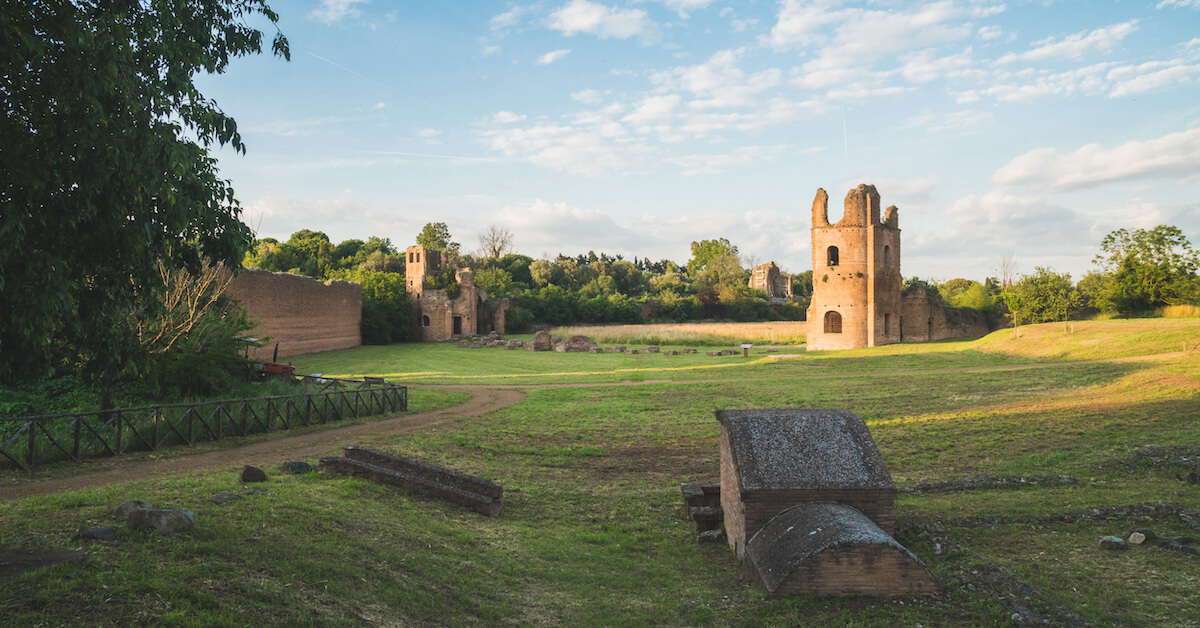
Within reach of Rome’s city center, the Via Appia is a gentle stroll along the oldest and longest road of the ancient republic. Stretching from Rome down to Brindisi, the Appian Way is a picturesque path, mostly cobblestone, lined with cypress trees, ancient architectural ruins, and quaint scenery.


© Ioana Catalina E | Dreamstime


Constructed in 312 BC and named after the wealthy and powerful magistrate Appius Claudius Caecus, the Appian Way was originally purposed as an army supply road for the empire. As time went on, the road expanded; many tombs were built here (as bodies were forbidden from being buried in the city center) along with family homes and catacombs. Perfectly cobbled stones create a path to connect these stunning structures, and they exist practically unchanged from over 2,300 years ago.


Although the road reaches a total of roughly 348 miles, the most visited portion (Via Appia Antica) is within the first mile in Rome, in the Parco Regionale dell’Appia Antica. Starting at the Catacombs of San Sabastiano, follow the path to a string of ruins and houses, each more charming than the previous. An easy walk, this route is great for family strolls, especially on Sundays when the road is closed to vehicles.


Featured image: © Ioana Catalina E | Dreamstime


Villa Doria Pamphili

Villa Doria Pamphili, Italy: Off The Beaten Path


The largest landscaped park in Rome, Villa Doria Pamphili is a stately 17th-century villa with lush adjoining gardens. Wander through the estate, admire the meticulously trimmed hedges, and find yourself lost in a dreamworld of luxury in Italy’s capital. Constructed by the noble Roman Pamphili Family in 1630, the property has expanded over the centuries, growing in grandeur and status.


The first stop you’ll make as you head into the estate is at the entranceway; the “Arch of the Four Winds” stands in all its blush-colored glory with carved archways and statues for stylistic representation. This grand entrance commemorates the former Villa Corsini which used to stand in its place before the french bombardment in which it was destroyed.


Moving into the property itself, visitors have much to explore. The Casino del Bel Respiro (“small villa of good breath”) sits comfortably in its baroque elegance; white washed walls with powder blue shutters, this country residence has an angelic aura amidst the landscape.


The grand villa stands adjacent to the Secret Garden, a lush manicured garden with swirling hedges and treasured embellishments. Look for the fountains, statues, chapel, and carved architecture to peak your curiosity. If you’re still longing for adventure, follow the gentle waterfalls that lead from the picturesque pond and stop at every fountain on the property; there are seven!


With a heritage of nobility and status, the Villa Doria Pamphili has the history, beauty, and character that is both charming and significant to the Monteverde area.


Featured image: © Giuseppemasci | Dreamstime


Abbey of San Galgano Interior

Abbey of San Galgano, Italy: Off The Beaten Path


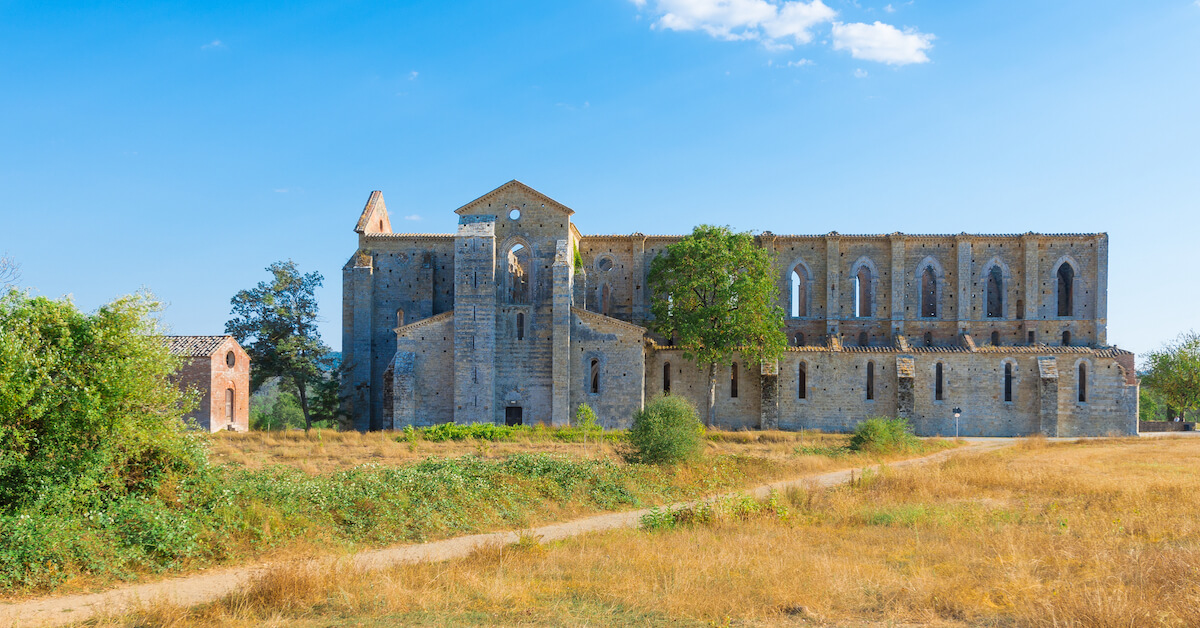
One of Tuscany’s most famous monasteries lies in beautiful ruins: the San Galgano Abbey. Sitting in a golden field with cypress trees dotting the property, the Abbey of San Galgano holds onto its Italian Gothic-Cistercian architecture, if only by the bones. With soaring archways and sweeping views, this ancient monastery is a picturesque spot to explore and reimagine history.


As history tells, Italy’s noble knight Galgano Guidotti left his life of wealth to live as a Cistercian monk in 1180, following a series of dreams and religious visions. To signify the abandonment of his status, Guidotti struck a rock with his sword, creating a real-life Excalibur. The sword-in-rock is preserved in a chapel at the nearby Montesiepi hermitage. Four years after his death, Guidotti was named Saint Galgano for his life of charity.


Abbey of San Galgano Exterior

© Bubutu | Dreamstime


In honor of Saint Galgano, the Cistercian monks built the Abbey of San Galgano in Siena, which was later devastated in 1300 by Giovanni Acuto’s troops. By the end of the 14th century, the abbey was the only structure left of the monastery.


Today, with it’s roofless walls and 13th-century style, the abbey is a breathtaking piece of architecture. From the tall nave with its soaring windows to the addition of the rose window still standing, the ancient structure is a vista to behold.


Featured image: © Marco Saracco | Dreamstime


COVID-19 Testing Sites in Italy


All travelers, including those that are vaccinated, must present negative results from a COVID-19 test taken within 72 hours of arrival back into the United States. If you are returning home via United Airlines, Delta, or American Airlines, we highly recommend using one of their recommended self-tests. You can easily book an appointment time that best suits your needs and perform these tests under the instruction of a medical professional through an app on your phone within the comfort of your hotel room.


Unvaccinated travelers in Italy will likely require additional tests, and the self-tests suggested by US airlines may not be accepted. Negative test results from within 48 hours are now required for unvaccinated travelers to go inside restaurants (food tours included), museums, bars, spas, pools, gelato shops, gyms, concerts, and sporting events. This includes the Ancient Rome sites like the Colosseum and the Forum, and also the Vatican. Soon, tests will also be required in order to board various means of transportation, such as trains and domestic flights.


Many hotels are happy to arrange COVID tests on the property for their guests. Though it is often more expensive, it may be worth discussing with your hotel, particularly if you are in a more remote area (such as Tuscany or the Amalfi Coast).


Below we have listed a number of testing sites in some of our most popular Italy destinations in order to aid you in sorting out your testing needs. For some locations, you may need to book an appointment in advance. If you need help doing so, the concierge at any of your hotels can assist you.


Rome


Farmacia del Corso
Address: Via del Corso, 242, Rome 00186
Phone: +39 066 792 983


Centro Diagnostico Pantheon
Address: Via Giustiniani, 12, Rome 00186
Phone: +39 066 880 5685


Farmacia San Lorenzo in Lucina

Address: Piazza di S. Lorenzo in Lucina, Rome 00100

Phone: +39 066 871 525


Florence


Lifebrain Poliambulatorio UMA
Address: Viale Giuseppe Mazzini, 16, Florence 50132
Phone: +39 055 574 344
Website: https://www.lifebrain.it/en/


Venice


Venice Airport
Address: On the ground floor inside the terminal, Venice Marco Polo Airport, Viale Galileo Galilei, 30, Venice 30173
Phone: +39 320 833 7932
Website: https://www.veneziaairport.it/en/info-and-assistance/swab-test-covid-19.html


BIELO HUB
Address: Sestiere Santa Croce, 499, Venice 30135
Phone: +39 041 523 7870
Website: https://www.bielohub.it/


Positano


Farmacia Ottica Rizzo
Address: Viale Pasitea, 22, Positano 84017
Phone: +39 089 875 863


View across a green pond of Borgo Medievale Turin, a small medieval village of stone walls and towers

Borgo Medievale Turin, Italy: Off The Beaten Path


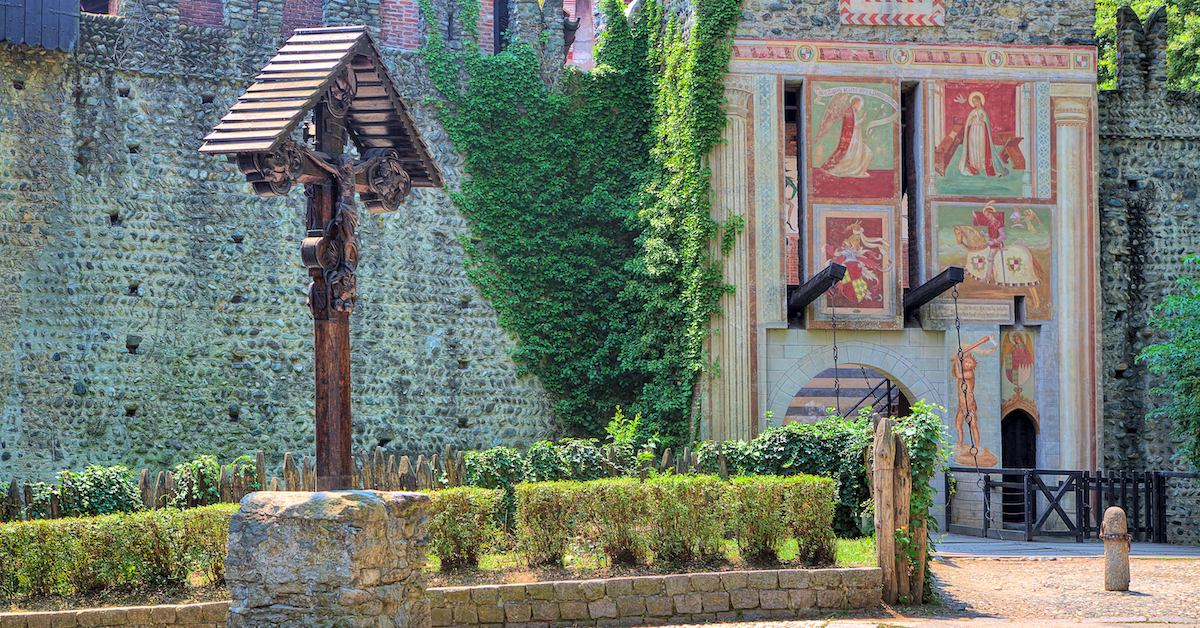
On the banks of the Po River, Borgo Medievale Turin transports visitors to the days in Piedmont of drawbridges, courtyards, and knights in shining armor. As an open-air museum, and nestled within the Valentino park, families can wander through the gardens, along the decorated alleyways, and into a world not far from a fairytale.


The Medieval Village was originally created for the Italian general exhibition in 1884; it sought to recreate the atmosphere of a Piedmontese town in the 15th century. Within the fortified walls, the narrow streets are lined with artisan shops and the occasional restaurant to explore; both have animated workers ready to explain their craft and its relevance to the history of the region. From the paper mill to the farrier’s laboratory, from the bakery to the church, there are so many nooks to find!


An old wooden crucifix with a medieval gate in a stone wall in the background

© Rostislav Glinsky | Dreamstime.com


The focal point and main attraction of Valentino park and Borgo Medievale Turin is the grand fortress. With a paid ticket, you can head up the hill, and into the castle to view the armor, weapons, and furnishings that were common of the Medieval times in Italy. From there, head to the “Garden of Delights,” where you will find lush flowering plants, medicinal herbs, and aromatics that will make your senses swirl with delight!


Depending on your pace and how much time you like to spend in noticing the fine details and craftsmanship of the quaint village, families could easily spend a full day within Valentino park. With so much to do within the incredible architecture, don’t forget to meander down to the Po for a restful retreat with a riverside view.


Featured image: © Marco Saracco | Dreamstime.com


Young couple holding hands crossing the street with the Vatican in the background

7 Italy Honeymoon Destinations


From glowing sunsets over the undulating vineyards of Tuscany to candlelit dinners serenaded by the gentle waves brushing the Amalfi Coast, everything about Italy screams romance. Every step through cobblestone streets of grand cities like Rome and quaint towns like Bellagio will open journeys that leave you more and more enamored with not only Italy, but also with your new spouse. While any trip to this land is nothing short of magical, these Italy honeymoon destinations highlight some of the country’s greatest offerings for all different types of newlyweds.
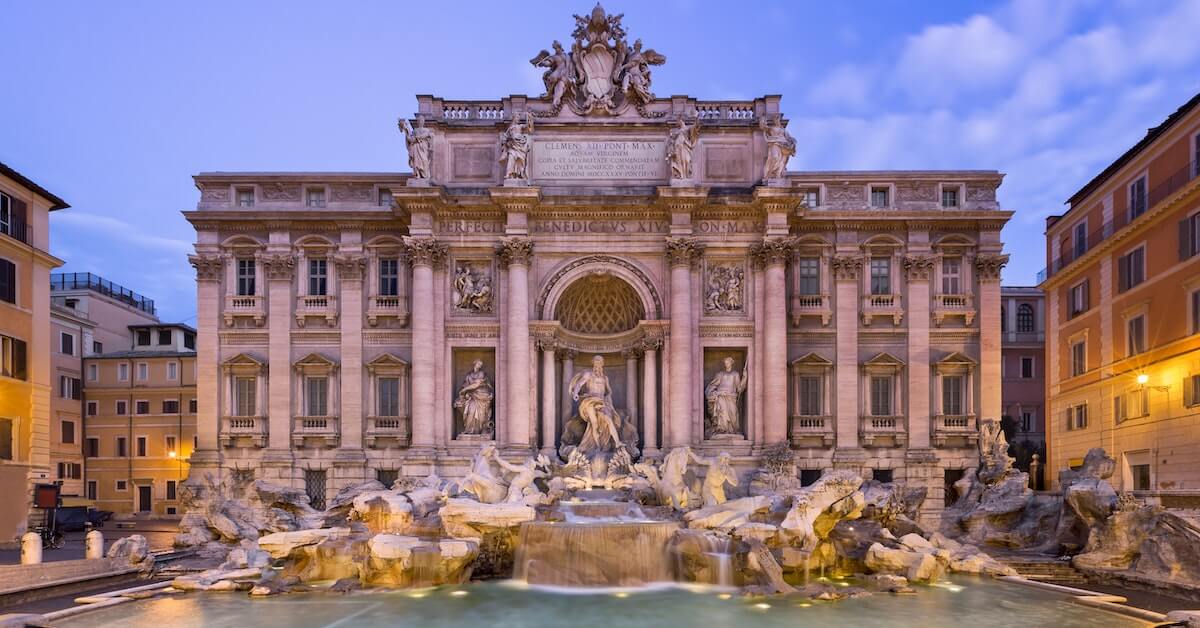
 

Trevi Fountain lit up at sunset in Rome, one of the most popular Italy honeymoon destinations

© Andrey Omelyanchuk | Unsplash


1) The Big Three


It’s not without reason that Rome, Florence and Venice make up Italy’s famous “Big Three” of hotspots. Rome is a historical wonder hailing from one of the most powerful empires of all time, with evidence of this found in massive stone monuments around every corners. Florence captures the essence of the Italian Renaissance as home to some of the most known art pieces in the entire world. And Venice’s network of canals navigated by elegantly crafted gondolas never ceases to amaze.


Visited in tandem, these three cities not only act as the perfect introduction to Italy but to Europe as a whole. The Colosseum, the Duomo and the Grand Canal are some of the biggest bucket list sights to see across the entire continent and you can witness them all over number of days. And you certainly won’t be short on amazing dining experiences. The allure of these cities not only pulls in travelers, but also some of the top culinary talent in the world.
 

© Ltorma | Dreamstime.com


2) Amalfi Coast


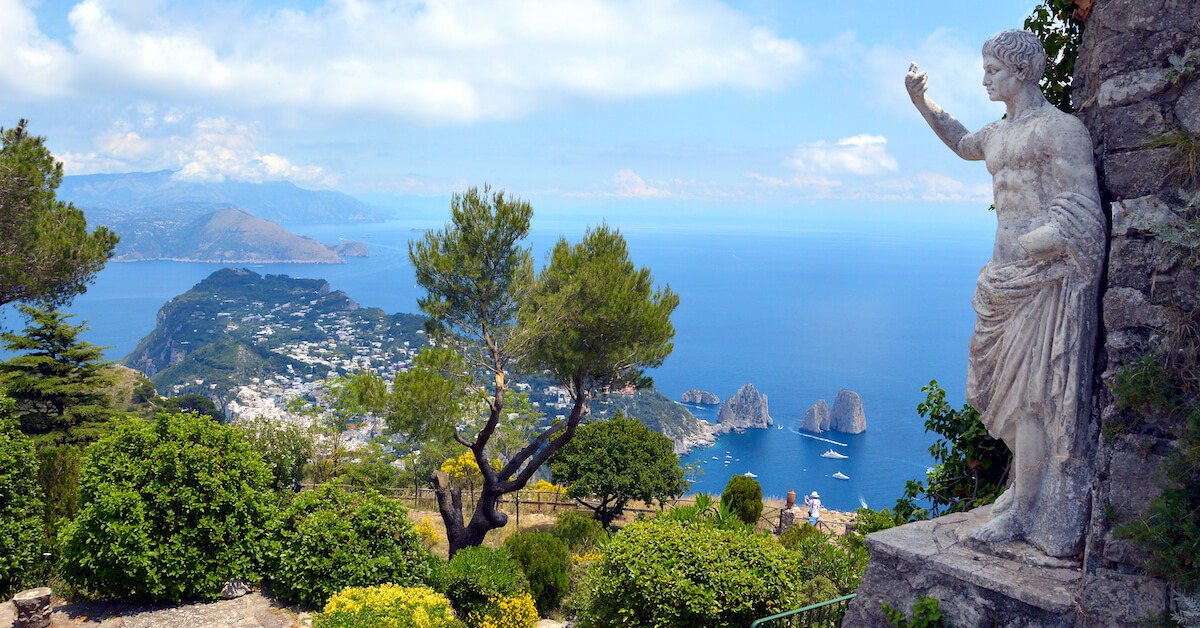
While most Amalfi Coast visitors spend only a few nights in Positano before rushing off to somewhere else in Italy, you could easily spend your entire honeymoon here. And there are definitely advantages to a slow journey through this region. You could take the time to stay for a few nights onthe island of Capri, and enjoy its serene evenings once the day-trippers have departed. You could spend some time in the less active but incredibly scenic village of Atrani, or you could take in the world-class cuisine and sweeping views from the clifftop town of Ravello. Whichever vibrant towns you choose, find yourself a beach chair and a bottle of limoncello to enjoy your endless days in the sun to their fullest.
 

© Freesurf69 | Dreamstime.com


3) Tuscany


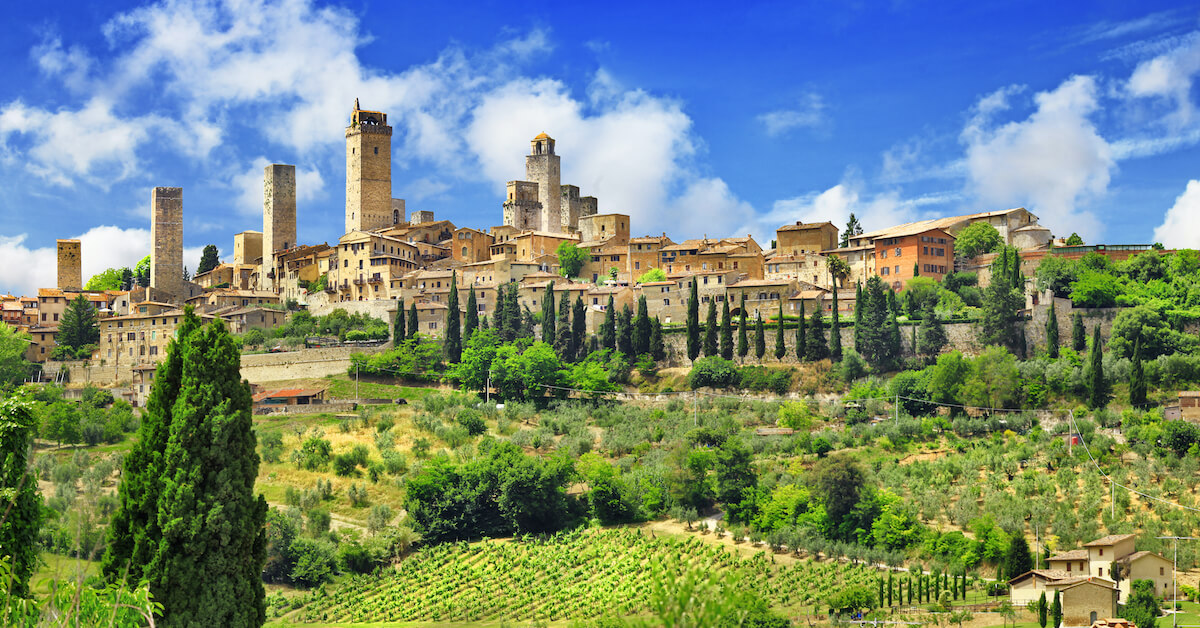
Tuscany is one of the best Italy honeymoon destinations for newlyweds who want a very leisurely vacation. This region isn’t about flittering from one monument to the next; it’s about taking in everything around you at any given moment, whether that’s the cuisine or the beautiful scenery. No matter where you decide to stay in Tuscany, you’ll be ensured plenty of romantic and delicious dinners paired with some of the best wine in the world and stays spent laid out by the pool or strolling through vineyards together.


Maybe one or both of you have been to Tuscany and loved everything about it, but are looking to journey somewhere new. In that case, consider Piedmont. It has delectable food, renowned wine and stunning countryside, yet rests a little further off the beaten path for truly unique experiences.
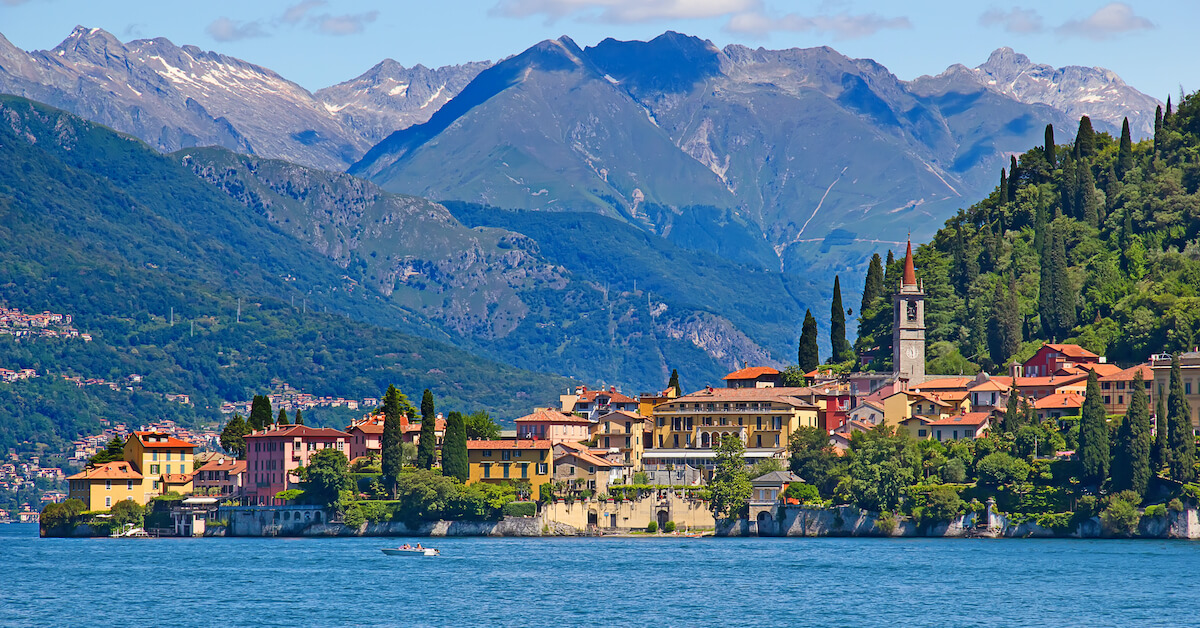
 

The town of Tremezzo on Lake Como, in the Lombardy region, one of the most relaxing Italy honeymoon destinations

© Swisshippo | Dreamstime.com


4) Lombardy


Milan, the fashion capital of the world, also serves as the capital city of Lombardy. Each year, it draws visitors with its high-end shopping, refreshing aperitivos and intricate architecture. But those who aren’t into the posh essence of Milan will still find more than enough in this region to fall in love with. Lombardy is equally famous for its myriad of glistening lakes lined with colorful towns, the most popular being Lake Como. When you feel you’ve gotten your fix of Lake Como, you could easily continue to lounge lakeside by skipping over to the even more laidback Lake Maggiore or Lake Garda.


If you’re looking to throw some adventure into the mix, the Lombardy region serves as a perfect gateway for the Italian Alps. This also makes Lombardy one of the ideal Italy honeymoon destinations to round out a winter wedding, whether you wish to ski your way down the mountains or snowshoe through them.
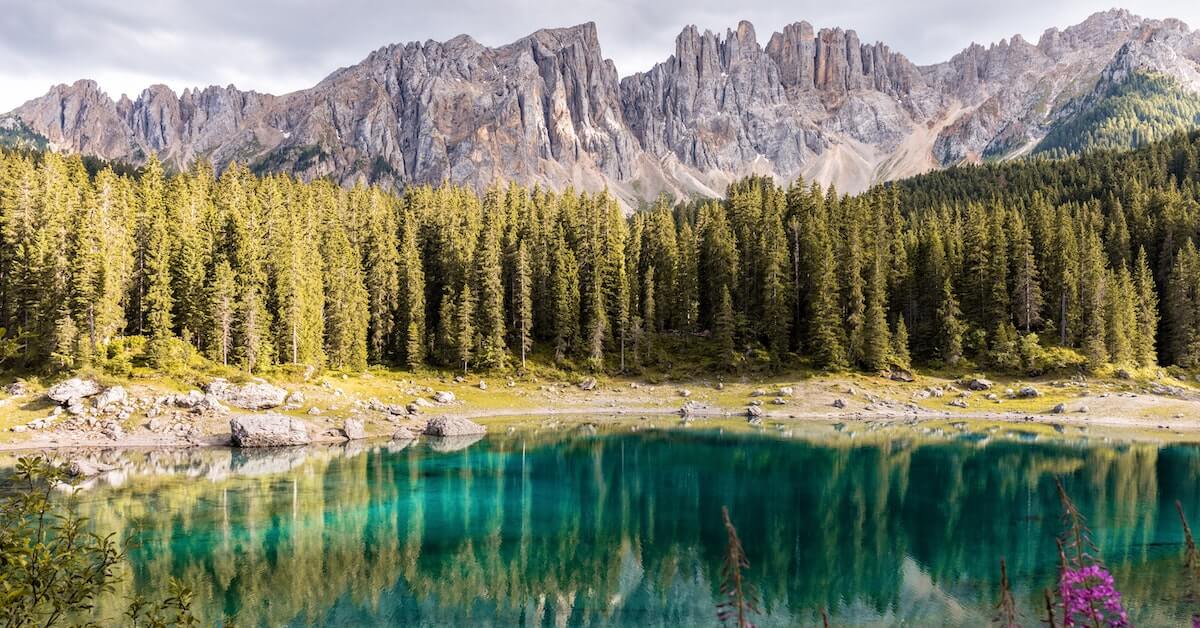
 

Jagged portion of the Dolomites in the background reflected in the turquoise Lake Carezza

© Riccardo Chiarini | Unsplash


5) The Dolomites


For the couple who has spent countless hours together in the mountains, look no further than the Dolomites for a thrilling honeymoon. This range encompasses the most popular part of the Italian Alps, known for its jagged peaks and turquoise lakes. There are a wide variety of hiking trails and ski slopes available for adventurers of all skill levels. If you’re really looking to get your hearts pounding, consider taking advantage of the scenic rafting, climbing or even paragliding opportunities. And when you’re ready to let your heart rate come back down, you will be able to retreat to one of the many mountain resorts where you can unwind with massages at the spa or a drink by the pool.
 

© Dalibor KastratovicDreamstime.com


6) Sicily


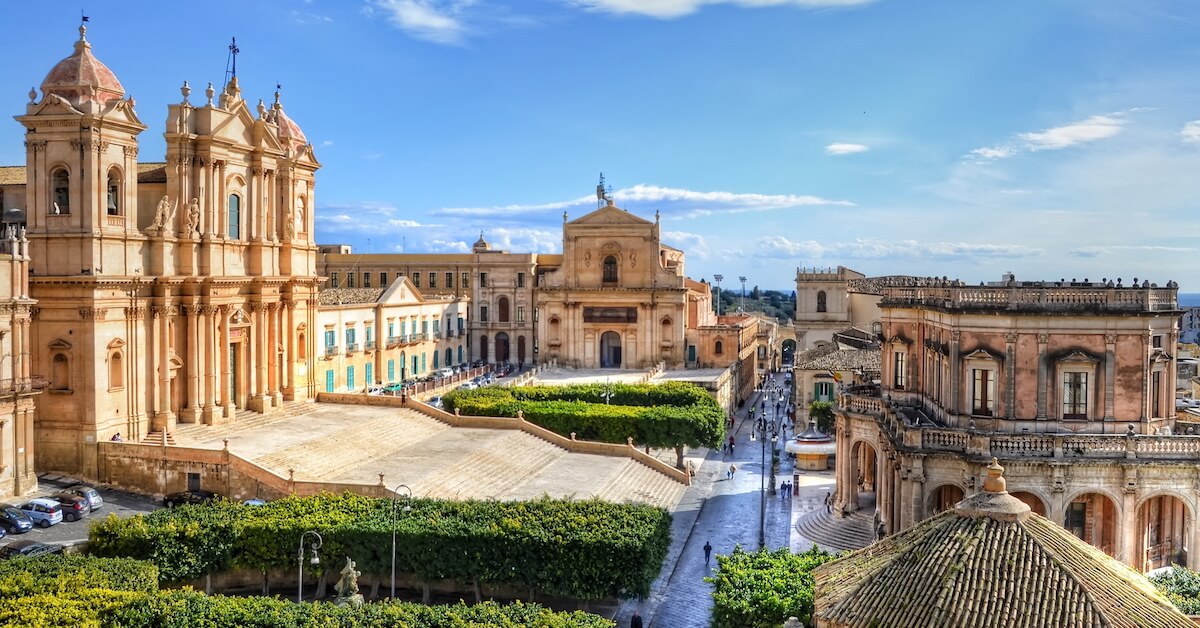
Those who have never been to Sicily are still very familiar with its distinct Italian cuisine. They say that the easiest way to someone’s heart is through their stomach, and if you and your spouse share this sentiment you should definitely consider making Sicily one of your Italy honeymoon destinations. Sample Italian favorites like Sicilian-style pizza, arancini, and cannolis in the land where they originated, all while being spoiled by luxurious coastlines and awe-inspiring ruins. While Sicily may not be as well known for its wine as Tuscany, you could choose to spend a day tasting varietals born from the volcanic soil of Mt. Etna.
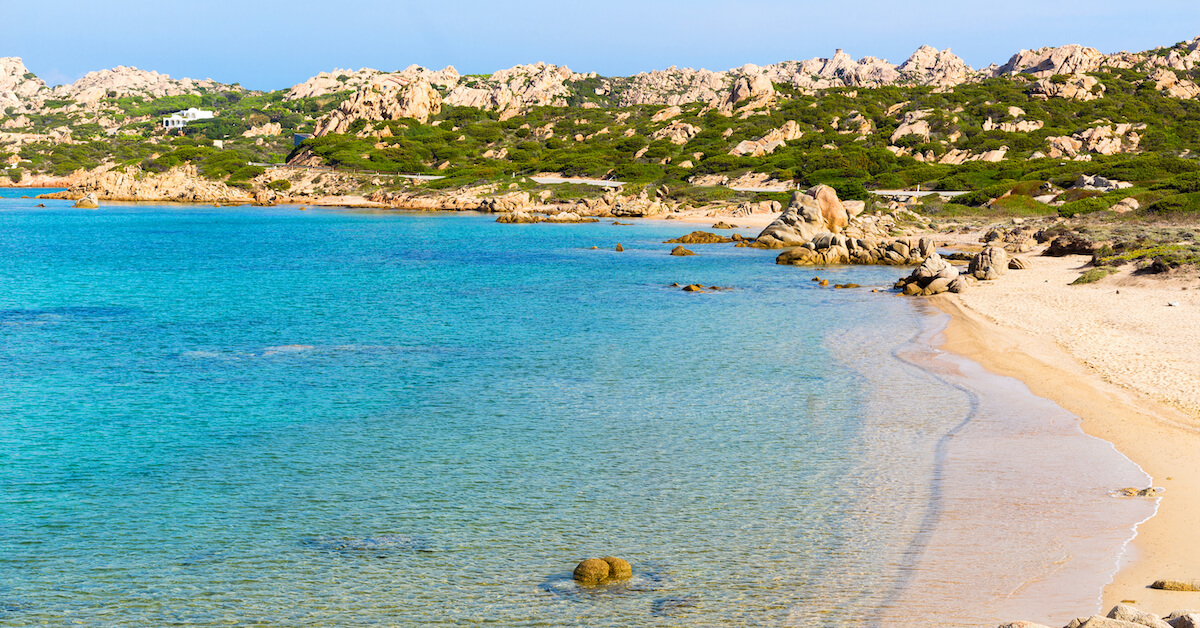
 

Bright blue water on the left with golden sands on the right and rocky greenery in the background at a beach in Sardinia, one of the most luxurious Italy honeymoon destinations

© ElitravoDreamstime.com


7) Sardinia


Sardinia, Italy’s lesser-known island region, is a beach paradise with golden sands and crystalline waters everywhere you go. Not nearly as heavily trafficked as Sicily or the mainland, Sardinia is where the two of you can retreat for the utmost tranquility and pampering before returning to your regular lives. One of the best ways to experience Sardinia is by taking to the sea surrounding it. In a single day you could hop off and snorkel, sail to some smaller islands just off the coast or even reach Corsica, a French island known for its cliffside towns and fabulous beaches.

 

Featured image: © Boggy | Dreamstime.com
Stone archways lining blue water leading into the Venetian Arsenal

Venetian Arsenal, Italy: Off The Beaten Path


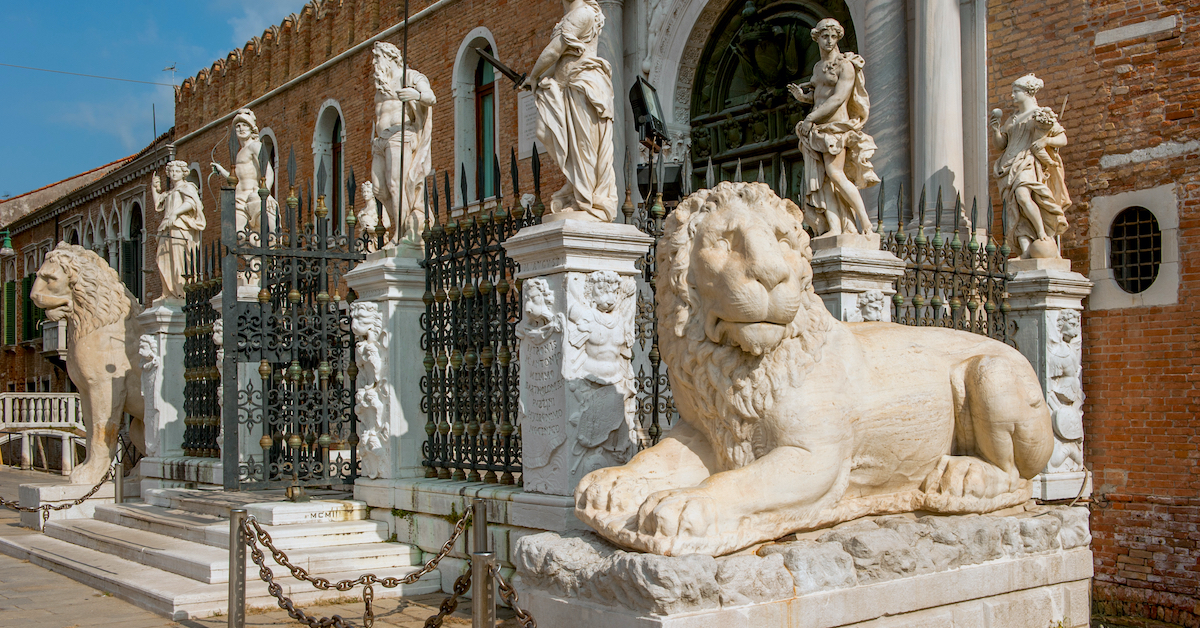
Existing in part as early as the 8th century, the Venetian Arsenal is a vast complex of shipyards and armories now open to the public for exploration. Featuring outdoor spaces and a walking bridge, possibly the most interesting feature on the grounds is the Piraeus Lion statue at the main gate. With a perplexing inscription and intimidating 9-foot stature, this lion demands the attention of all who question the naval power of the republic of Venice.


Spanning about 110 acres (or about 15% of Venice), the Venetian Arsenal was the largest industrial complex in not only Italy, but the entirety of Europe before the Industrial Revolution. The trading vessels built here generated a large portion of Venice’s wealth and power throughout the centuries. The main gate “Porta Magna” was created around 1460 as one of the first works of Venetian Renaissance architecture.


Two marble lion statues in from of the ornate gate of a reddish stone building

© Javarman | Dreamstime.com


Later in 1687, two white marble lions were plundered in Athens and brought to Venice to stand guard next to the main gate, giving the name “Porto Leone” or Lion Port. One of the sculptures, known as the Piraeus Lion, was displayed as a symbol of Saint Mark, Venice’s patron saint. Originally created around 360 BC, the lion was defaced by Scandinavian mercenaries in the 11th century. With runes carved in a dragon-like scroll on the shoulders of the lion, many have tried to decipher the meaning. Take a look for yourself; what is the Lion of Saint Mark telling you?


Featured image: © Andersastphoto | Dreamstime.com


View through a series of stone archways out toward mountains and green plants of the Villa Cimbrone Gardens

Villa Cimbrone Gardens, Italy: Off The Beaten Path


The Villa Cimbrone Gardens are a culmination of prestige, beauty, and the rich history of Ravello’s golden era. Earning its name from the jagged cliff on which it’s perched, the lush estate offers guests sweeping views over the Mediterranean sea as well as a peek into the ornate architecture, marbled statues, and flowering greenery of coast of Campania.


Originally belonging to the aristocratic Acconciajoco family in the 11th century, the property has passed hands several times over the centuries. It was extensively renovated in the early 20th century by British nobleman, Lord Grimthorpe, and is now a public historical sight.


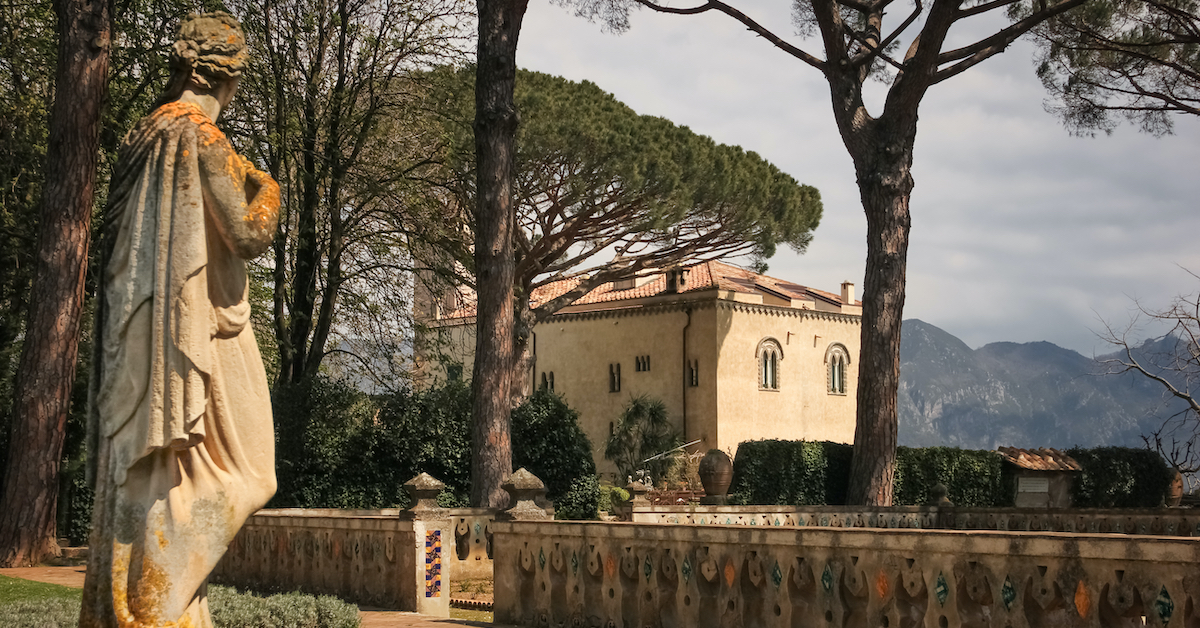
Rear view of a statue of a woman on the left with a beige stone house, trees, and mountains in the background of the Villa Cimbrone Gardens

© Daniel M. Cisilino | Dreamstime.com


The botanical garden sits adjacent to an exclusive 5-star hotel that shares its name, and is often used for weddings and receptions due to its stunningly romantic atmosphere. The Terrace of Infinity is perhaps the most breathtaking spot on the premises; the long patio parallels the horizon and is dotted with marble busts along the rim. Where sculpture meets coastline, and water meets sky… that is where magic happens.


The Ally of Immensity is the main walkway through the estate and features a wisteria-covered pergola in summer. Within the gardens, visitors will find temples and statues, pottery and stonework, as well as a cloister and crypt: all pointing the the artistry that has been so meticulously preserved.


With its classical styling and aura of days gone by, the Villa Cimbrone Gardens are recognized as an important cultural heritage site that all who visit the Amalfi Coast shouldn’t miss.


Featured image: © Daniel M. Cisilino | Dreamstime.com