Bright blue flowers in the foreground with the stone buildings of Castello Aragonese surrounded by bright blue water in the middle ground

Castello Aragonese, Italy: Off The Beaten Path


Suspended between air and sea, Castello Aragonese is a city in the sea. Sitting atop a volcanic rocky islet protruding from the northern end of the Gulf of Naples, the Aragonese Castle offers incredible views of the island of Ischia, as well as a cultural and historical perspective of rebirth.


Take the Path of the Sun along the rim of the islet and follow it through rich vegetation of olive trees, pomegranates, prickly pears and figs, for a panoramic view of nearby islands. Next, visit the Church of Saint Maria Dell Grazie, or the Church of the Madonna Della Libera for a spiritual experience above the sparkling aquamarine waters. From there, head to the House of the Sun, where remnants of homes dating to various eras are preserved as valuable architectural structures.
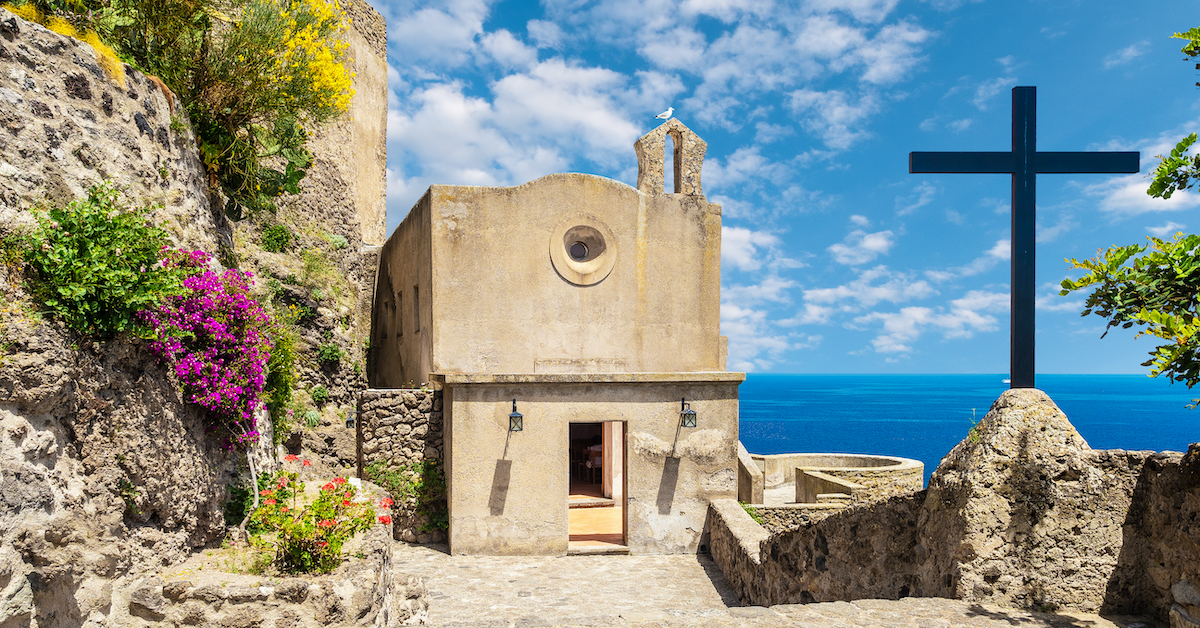
 

Small beige stone church with a tall black cross next to it and ocean in the background

© Marius Dorin Balate | Dreamstime.com


Originally built in 474BC by Hiero I of Syracuse, the castle was built as a military point to monitor enemy fleets. Over the centuries, the islet was captured and recaptured by Parthenopeans, Romans, pirates, the British, as well as the French, until it was sold to a private owner, the Mattera Family in 1912. The Mattera Family still owns the property and has revitalized the islet, bringing together the history, culture, and art of the castle.


Over 25 centuries, the Aragonese Castle has been home to convents, churches, prisons, and lush gardens; it is now building on that history as a sought out spot for globe trotters and locals alike. From rooftop restaurants to summer concerts, theatrical performances, and film festivals, there is no shortage of entertainment within Castello Aragonese.


Featured image: © Marius Dorin Balate | Dreamstime.com


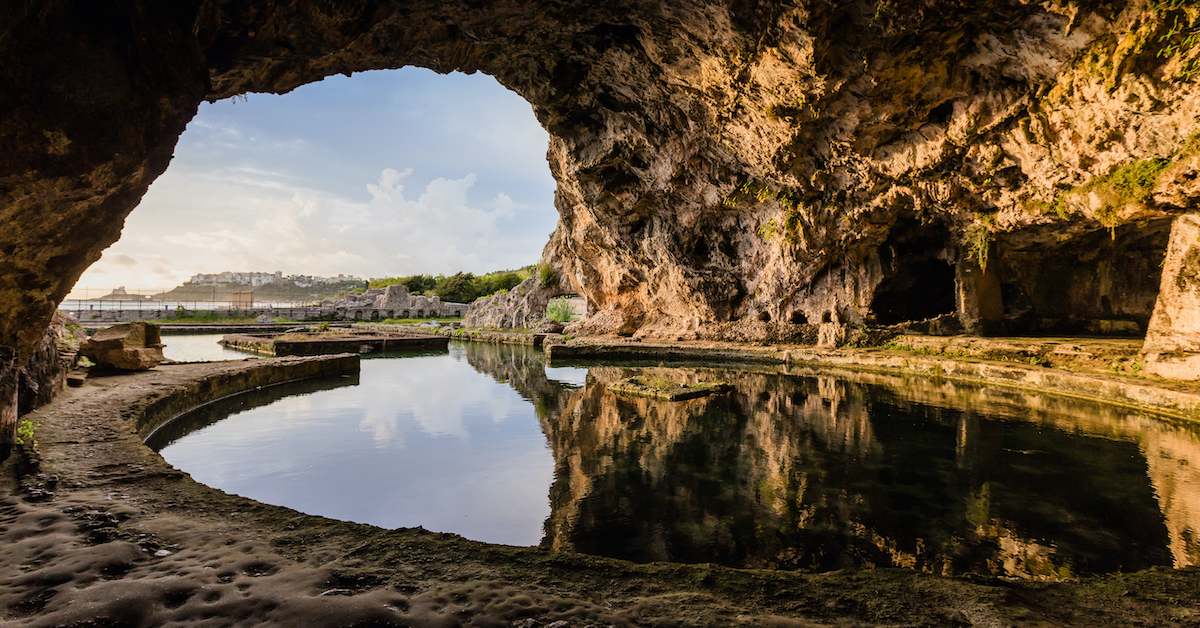
Water leading into a cave in the Villa of Tiberius in Italy

Villa of Tiberius, Italy: Off The Beaten Path


Just outside of quaint coastal town Sperlonga in Italy, you’ll find the Villa of Tiberius: a series of terraces facing the sea, and home to an ancient Roman sea grotto and the spectacular Sperlonga sculptures. With an archaeological museum on site, visitors can learn about the history and art of the excavation site, before heading down to the water to explore the ruins.


Inside of the cave in the Villa of Tiberius looking out toward the town of Sperlonga in the distance

© Pavel068 | Dreamstime.com


On the edge of the Pontine Marshes, the town of Spelunca (Latin for cave) was only known for the grotto located on its shore. It grew in significance only when a luxurious villa was built and owned, along with the cave, by Tiberius (emperor between 14 to 37 AD). Along with creating magnificent fish ponds and terraces to overlook the landscape and sea, Tiberius decorated the grotto with expensive sculptures, busts, and statues from well known artists of the time. The giant works of art depict tales of Odysseus, mythical king of Ithaca and his journeys, triumphs, and adventurous character.


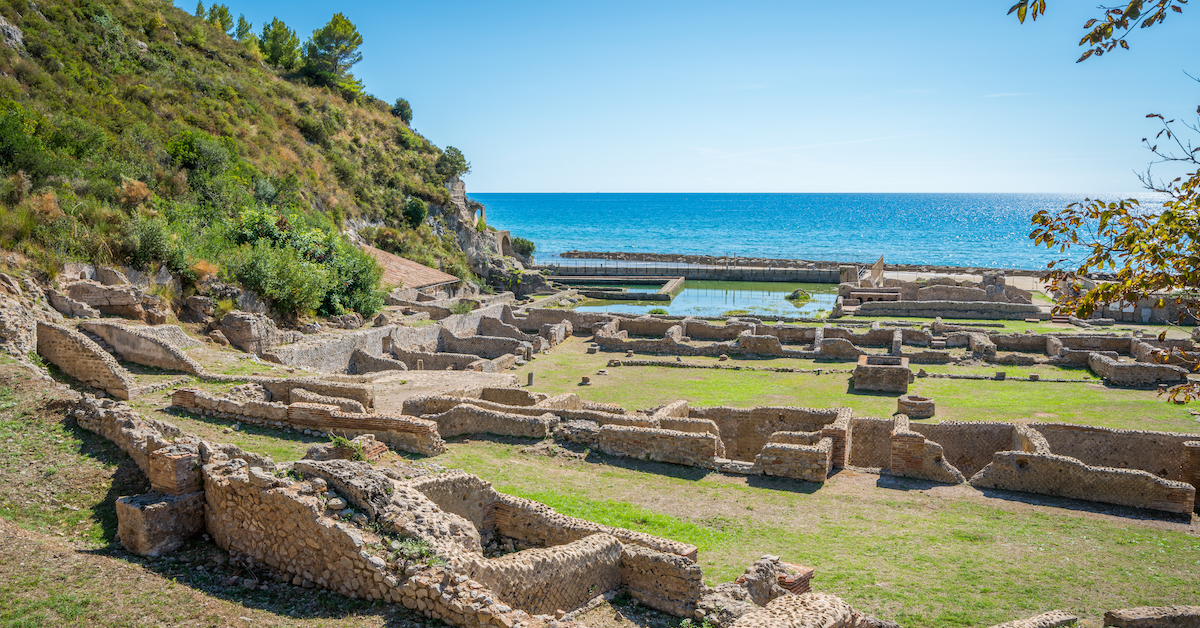
Short ruins scattered about grass with a cliffside on the left and ocean in the distance

© Stefano Valeri | Dreamstime.com


Always a known villa, but whose whereabouts where unknown, the Villa of Tiberius was finally discovered in 1957 while some builders were constructing a coastal road near the site. After delicate reconstruction and preservation, the property is open to the public to explore. Wander down the hilly slope, past the Mediterranean vegetation, until you hit the imperial palace. Meander past the low walls, admire the view of the sea, and head in the direction of Odysseus’s cave. It still holds the history of emperor Tiberius and the tales of the great Odysseus.


Featured image: © Pavel068 | Dreamstime.com


Metal chandelier hanging from an archway leading to the intricate stone buildings of Quartiere Coppede in Rome, Italy

Quartiere Coppede, Italy: Off The Beaten Path


With so many popular neighborhoods to explore in Rome, do not miss the picturesque Quartiere Coppede: an enchanting square with charming architecture and eclectic details. Looking like it was built for a film set, Quartiere Coppede has the Old Roma magic we’re all looking for in a trip to Italy. From the fairy cottages and spider house to the grand archway and ornate wrought iron chandelier, this quaint neighborhood is a diamond in the rough for those seeking to escape the crowds.


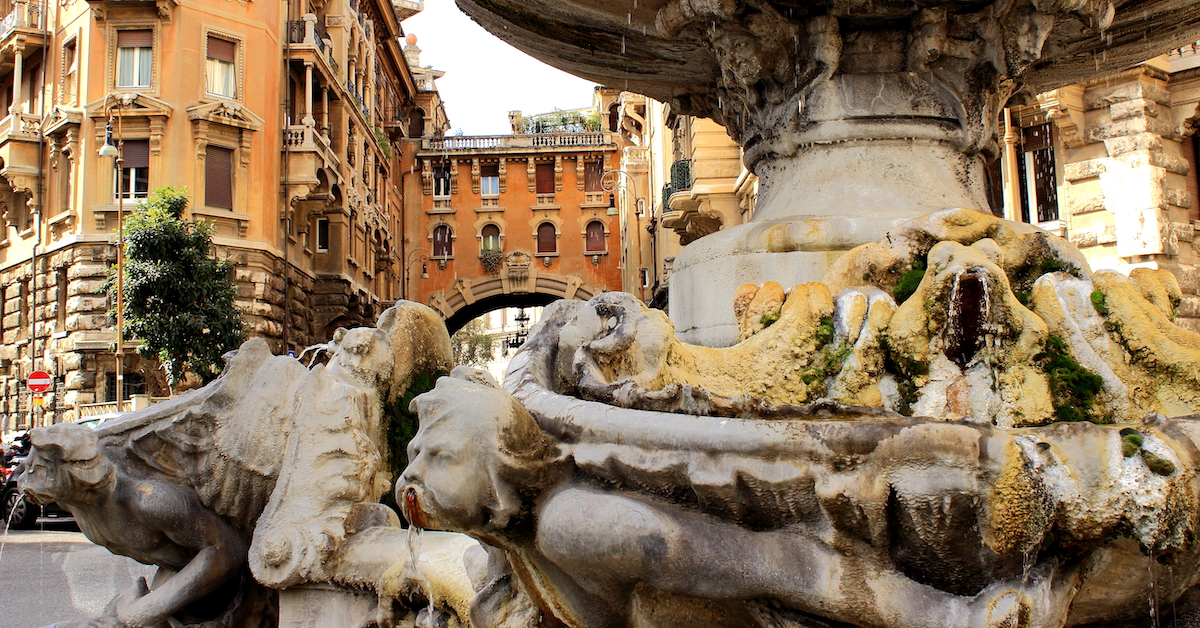
At the intersection of Piazza Buenos Aires, Via Tagliamento, and Viale Regina Margherita, this tiny quarter is a series of peach, marigold, and burnt orange buildings centered around the ornate “Fountain of the Frogs.” Built between 1915-1927, Quartiere Coppede was designed and created by Florentine architect Gino Coppedè with various styles of architecture at play: classical, medieval, and gothic to Baroque, Art Decò, and Art Nouveau. The wildly diverse styles come together to form an eccentric and beautifully unique atmosphere for all who pass through.


Close-up of a fountain in Quartiere Coppede

© Grozdanka Todorova-genevaDreamstime.com


Devoid of restaurants, shops, and other attractions, Quartiere Coppede is an unusual stop for globe-trotters, making it one of the best hidden gems Rome has to offer. Tucked away from the well known areas of Rome, Quartiere Coppede is a retreat from the busier districts of the city, and a place to meander with your camera; its unpretentious and humble character makes for a secluded and pleasantly surprising adventure.


According to urban legend, the Beatles jumped into the “Fountain of the Frogs” fully clothed after playing a show at the iconic Piper Club down the street.


Featured image: © FlydragonflyDreamstime.com


Villa Demidoff_feature

The Colossus of Villa Demidoff, Italy: Off The Beaten Path


Sitting in apparent anguish, the Colossus of Villa Demidoff, also known as Colossus of the Apennines, is a giant outdoor sculpture that seems to grow right from the rocky ledge it sits on. Located just outside of Florence, the Colossus sits in the transformed Park of Pratolino, next to a charming waterlily pond, and surrounded by acres of parkland to explore.


The massive statue dates back to the Renaissance and was created by Giambologna for the estate owner Francesco I de’Medici and his second wife Bianca. Made of brick and stone, the enormous sculpture used to be even larger than it is today, incorporating grottos, frescoes, and geometric decorations inside. Appreciate his pain, as well as his power, and take in all of this giant’s glory before adventuring through the rest of the magnificent property.


Villa Demidoff and the Park of Pratolino offers many enchanting sights: the beautiful Chapel of Buontalenti, Cupid’s Grotto, Fountain of Mugnone, and Maschera Fishpond to name a few. You can roam past the centuries-old oaks and local flora, and maybe even catch a glimpse of the deer and other wildlife that inhabit the land. This natural reserve is a picturesque spot to spend an afternoon in the sunshine and shade.


Featured image: © Giuliano2022 | Dreamstime.com


Isola San Giulio_feature

Isola San Giulio, Italy: Off The Beaten Path


Peeking up out of Lake Orta, just 400 meters from shore, the fairytale Isola San Giulio emerges from the rippling waves in the form of a beautiful and quaint village. With soaring mountains as the backdrop, and with picturesque architecture in both renaissance and baroque styles, the tiny island is irresistibly photogenic.


As you first arrive at the dock, follow the “way of silence and meditation,” a narrow street that meanders around the entirety of the island. Along the way, stop by the Romanesque Basilica di San Giulio (a 19th century seminary, and the top attraction of St. Julius Island), the bishop’s palace, and the Benedictine abbey. This abbey is still a permanent convent of cloistered nuns who devote themselves to prayer, study, restoration of church vestments, and making the famous “pane di San Giulio.”


Isola San Giulio_1

© Frank BachDreamstime.com


There are a handful of mansions to visit while exploring the secluded island, including Villa Perone and Villa Crespi, both of which are magnificently styled with gardens. Most of the other buildings on the Isola San Giulio are private residences, though one of the oldest, Villa Tallone, opens yearly to host classical concerts.


With a rich history, and a whole lot of beauty and character, St. Julius Island is a perfect day trip for those traveling within the Piedmont area of Italy and looking for a remote adventure.


Featured image: © ThegateagencyDreamstime.com


La Scarzuola_feature

La Scarzuola, Italy: Off The Beaten Path


A surreal and magical place, with hidden chambers and mysterious symbolism, La Scarzuola is a fairytale convent with an evocative atmosphere. From extravagant mosaics to looming gargoyles and the all-seeing-eye, this 16th century monastery-turned-haunting-wonderland is characterized by an astronomical and labyrinthine feel.


According to medieval chronicles, this is the place where Saint Francis of Assisi planted a rose and a laurel; miraculously, a fountain sprung up and flowed. Saint Francis built himself a hut at the spot in 1218, and the counts of Marsciano later constructed a church and convent complex in its place as a remembrance of the miracle.


In 1956, the complex was bought by milan architect Tomaso Buzzi and transformed it into his idea of an “ideal city.” Apparently inspired by Francesco Colonna’s romantic story, “Hypnerotomachia Poliphili,” the architectural style best associated with La Scarzuola is neo-mannerism; the use of stairs in various directions, the deliberate disproportion of some structures, the heaping together of buildings and monuments, they all point to his bizarre and slightly idealistic vision. With 7 theaters and an eccentric design, this “lay city” was quite the contrast to the “holy city” adjacent to it.


A sort of “autobiography in stone,” La Scarzuola is a physical reflection of Buzzi’s philosophical inner life as well as an interpretation of the unconscious mind. A modge-podge of familiar monuments (Arc de Triomphe, Parthenon, etc) are intertwined with dark symbolism in layers of structures and winding corridors, all paralleling and defying the church convent next door. As a real eschatological allegory of existence, La Scarzuola is worth traveling to Italy’s Umbria region for.


Featured image: © JavarmanDreamstime.com


Baia_feature

Baia, Italy: Off The Beaten Path


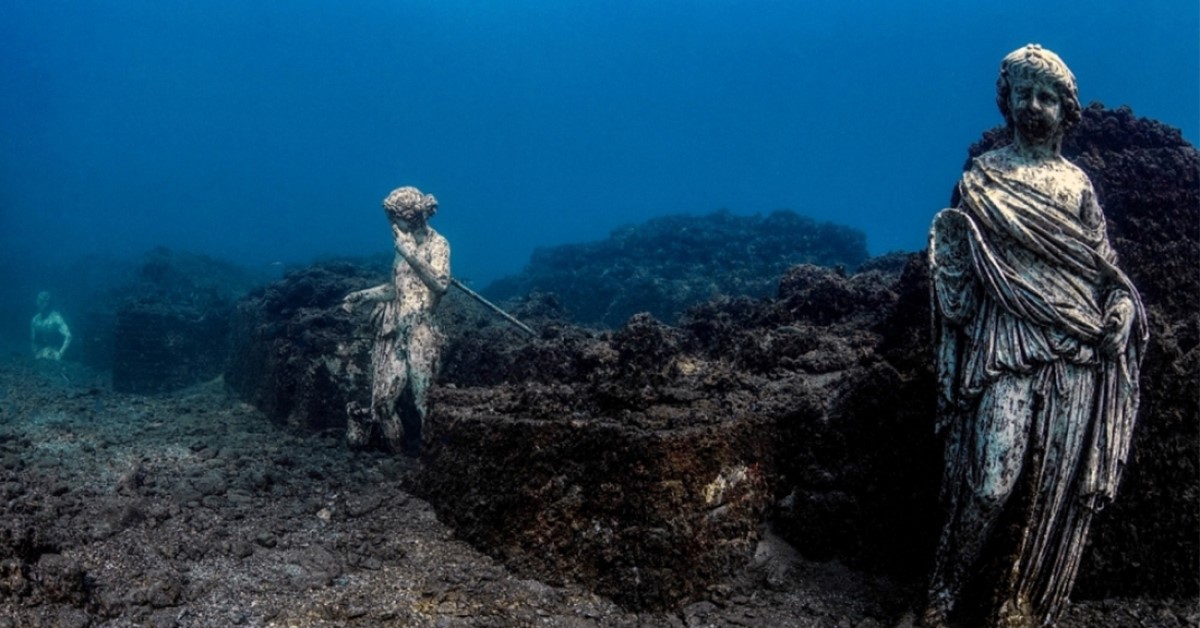
On the northwest shore of the Gulf of Naples, there’s an enchanting glimpse of history in the depths of the sea: The Archeological Marine Park of Baia. What was once a thriving holiday resort for the ultra-wealthy Romans, Baia was later partially submerged due to volcanic activity. With an otherworldly sense of awe and quiet, explorers can snorkel or scuba dive to view the intricate mosaics, marbled floors, eerie statues, and imperial baths.


Baia_1


From 100BC to 500AD, Baia was a destination spot for the super-rich; it was deemed more fashionable than Capri or even Pompeii. Roman socialites constructed luxury summer villas that included ornate tile floors, grand columns, and beautiful murals. Down the street, these high caliper Romans would seek out mineral baths that were set atop local hot springs. They were truly living in extravagance.


But opulence and vice sometimes go hand in hand. Along with the riches and fame, Baia was notorious for its rumors of scandal, corruption, and hedonistic offerings. Sextus Propertius characterized Baia as a “den of licentiousness and vice,” while Seneca the Younger describes it in one of the moral epistles as a “vortex of luxury” and a “harbor of vice.” With a dark side to its fame, Baia was attacked during the Barbarian Invasions, as well as throughout the 8th century. It was later abandoned in 1500AD for recurrent malaria spikes.


As it was located in the Phlegraean Fields, an active volcanic area, the town eventually began sinking into the sea, with the lower part of town being fully submerged by the end of the 8th century. Today, this previously elite city includes above ground ruins (Parco Archeologico delle Terme di Baia), as well as a series of 5 underwater sites that range from 5-13 meters in depth. An incredible submerged city, Baia is an adventure waiting to happen.